
Tidal Hours: Movement, Light, and the Endless Summer
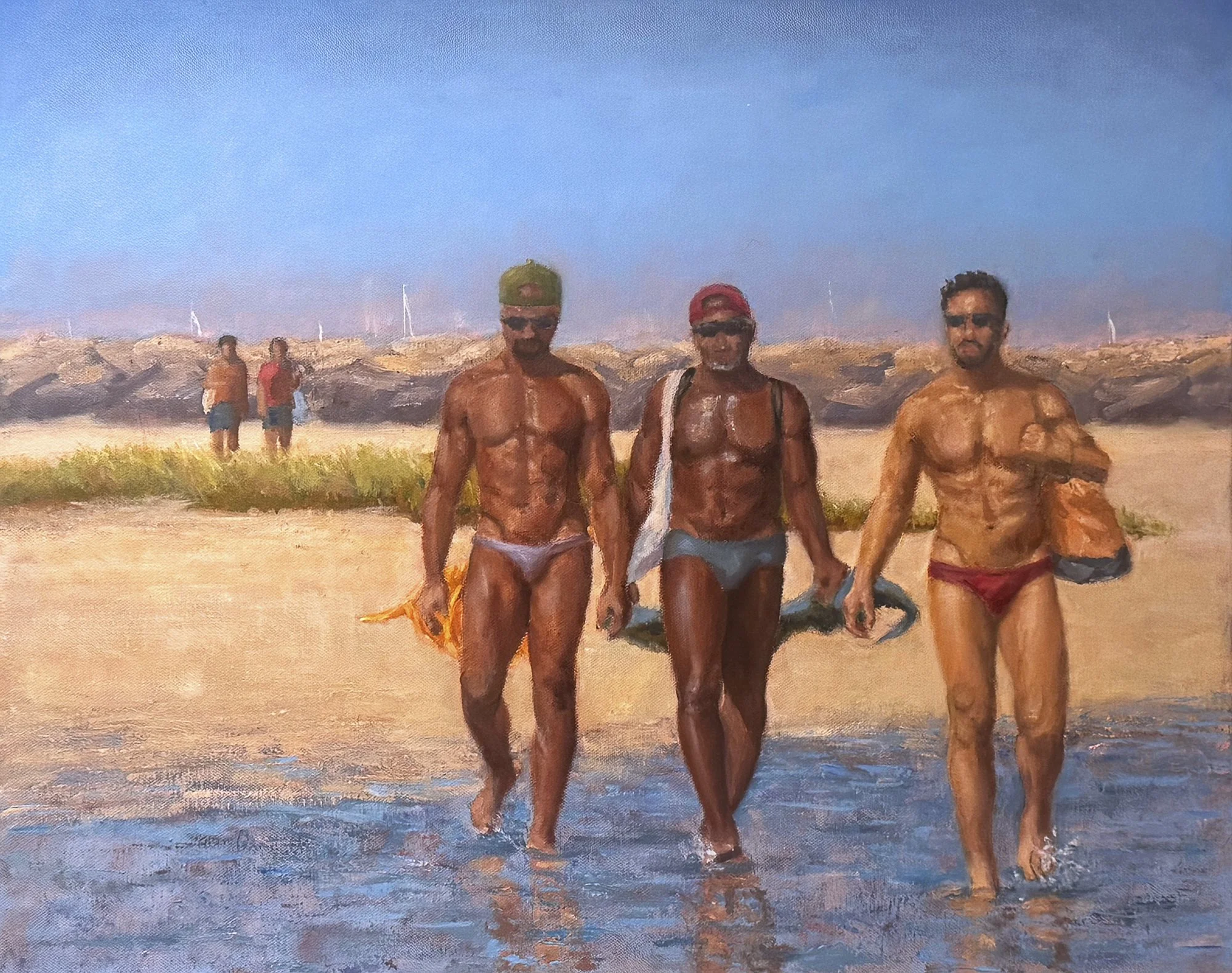
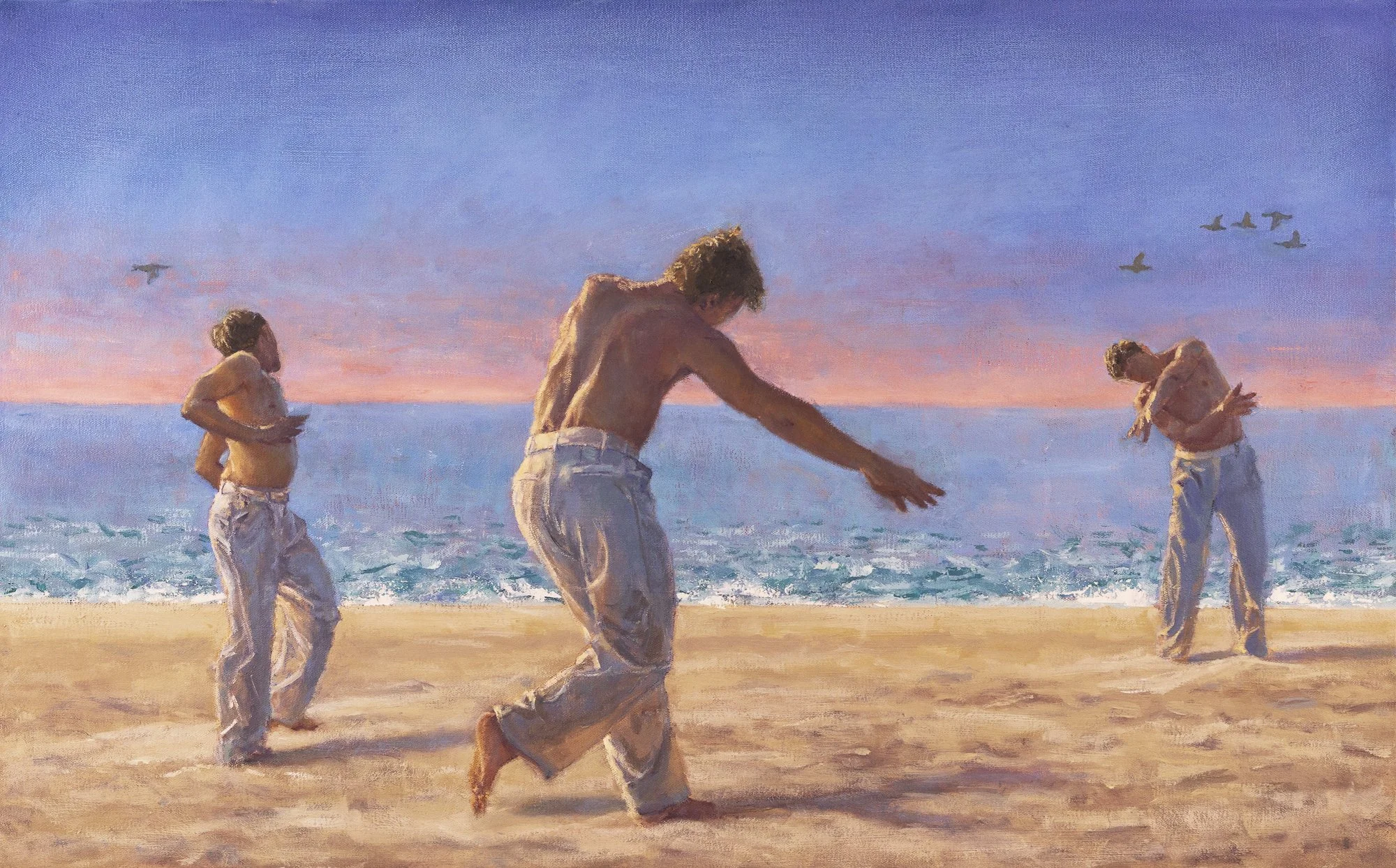
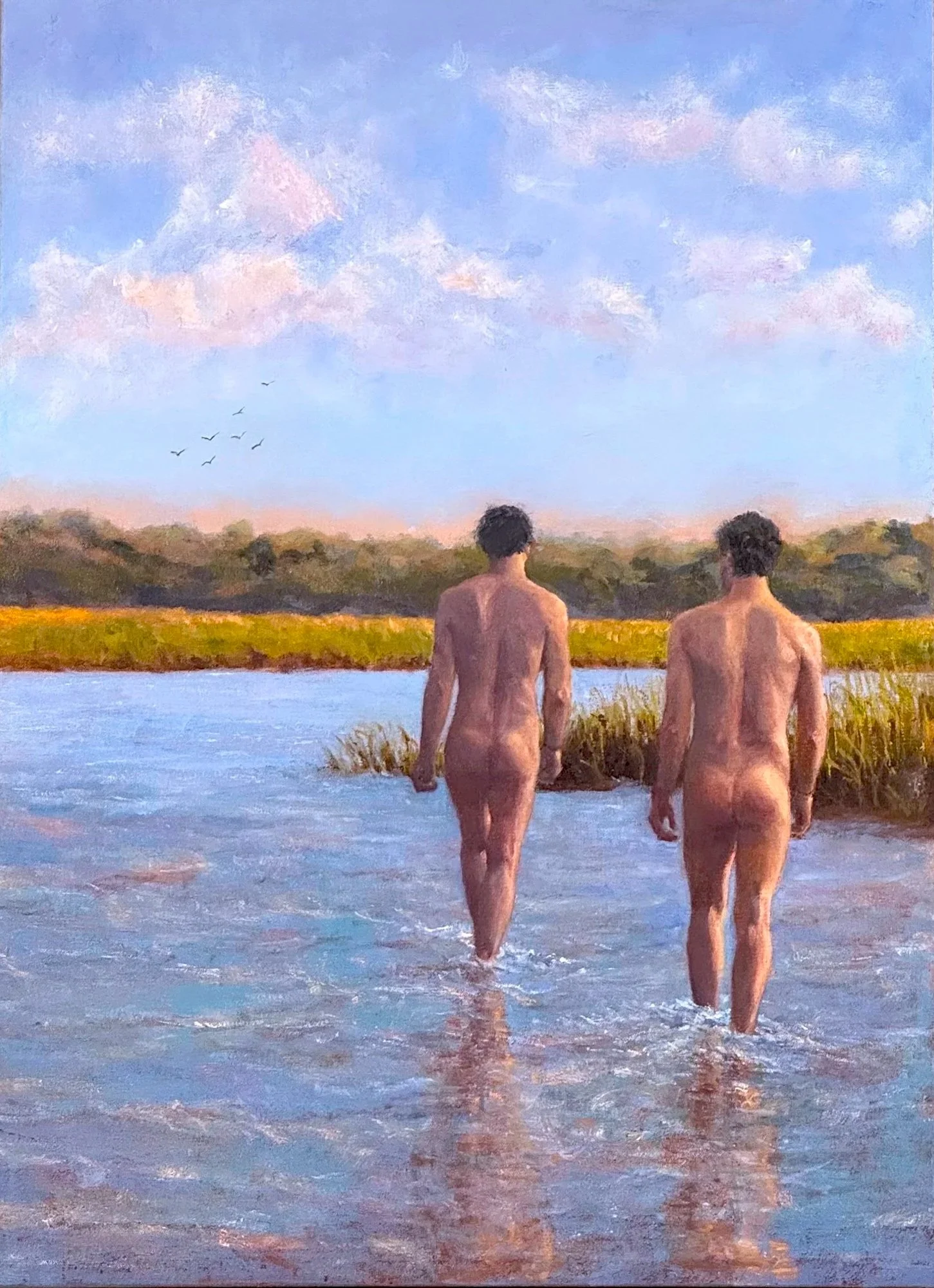
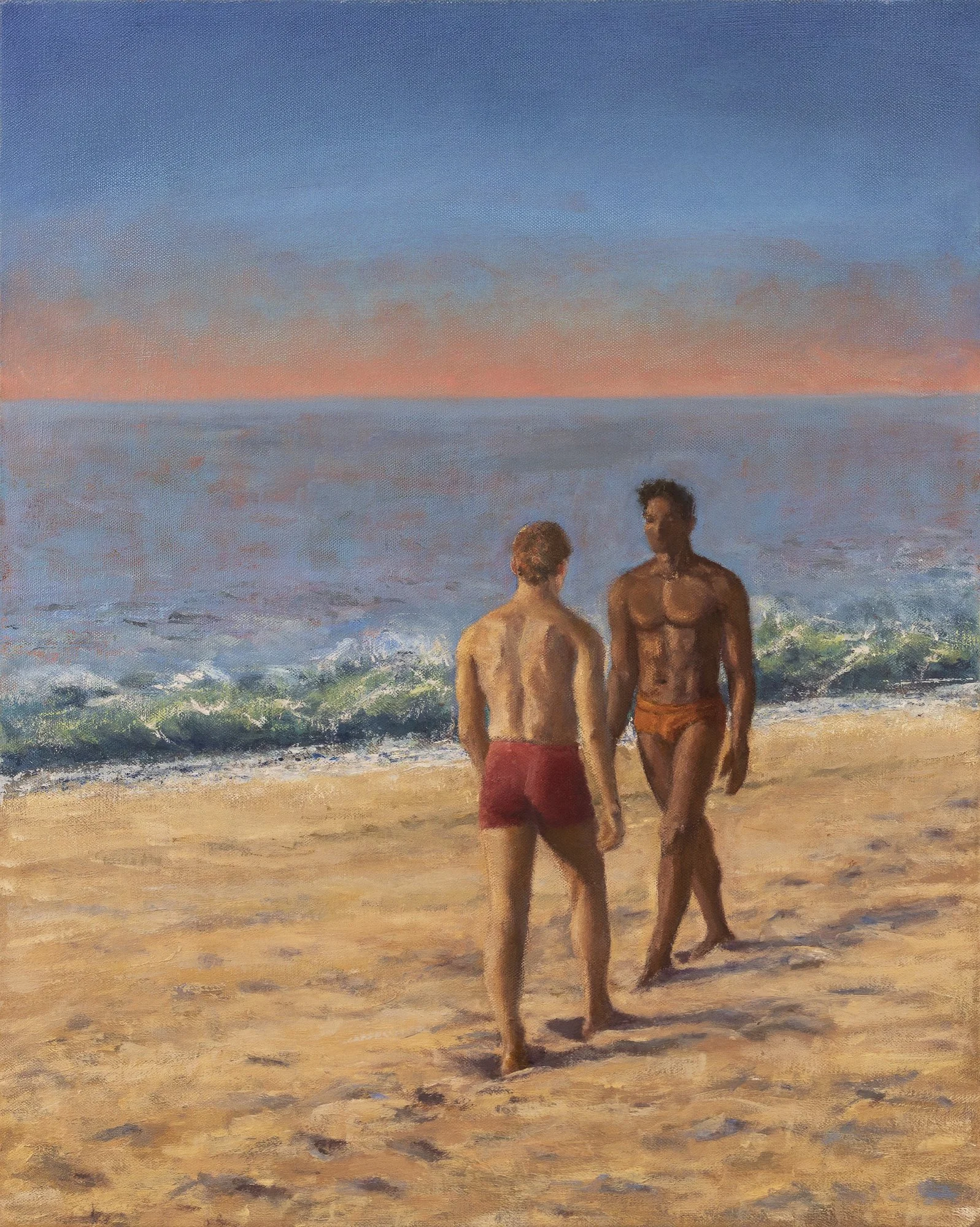
On Friday, June 5th, Greg Salvatori Gallery opens Tidal Hours: Movement, Light, and the Endless Summer — nine new oil paintings by Eric Price. The opening reception begins at 6:00 PM at 366 Commercial Street, Provincetown. The exhibition runs through June 18th.
Price is a Provincetown-based figurative painter and graduate of the New York Academy of Art (MFA) whose work centers on the male figure within the luminous coastal landscapes of the Outer Cape. His paintings move through a summer day — from bright midday crossings to the rose and violet of dusk — finding in Provincetown's tidal flats, dunes, docks, and open water an ongoing conversation between place, body, memory, and belonging.
Ahead of the opening, Price wrote a beautiful essay about how Provincetown shaped him as a painter — and what he found here that he had been looking for long before he arrived.
What Provincetown Taught Me to Paint
By Eric Price
I did not move to Provincetown to become a painter. I moved here to find community.
It was the fall of 2001, after September 11th, and New York had cracked open. I was still a book publisher then, co-running Grove/Atlantic, and the city I had lived in for decades felt like a place that had lost its nerve — or perhaps I had lost mine.
I had vacationed in Provincetown before. I knew Commercial Street, the walk across the salt marsh to Boy Beach, the afternoon ritual of Tea. But I had never arrived the way I arrived that autumn: looking for something I could not quite name.
Almost immediately, I understood that this was a place where I could be seen without apology. Provincetown's queer community, its stubborn independence, its radical welcome, its scale — small enough to know people, large enough to hold multitudes — settled something in me. I began to explore my identity more freely than I ever had. I walked across the salt marsh with our dog. I went to the beach. I met people. I felt, before I quite had the words for it, that I had found my home.
Some years later, my father came to visit. He looked out at the water, the dunes, the light across the harbor, and said, "Since you were six years old, you wanted to live near the ocean."
I had forgotten that. But the moment he said it, I knew it was true. Whatever I had been searching for in Provincetown, some part of it had been written into me long before.
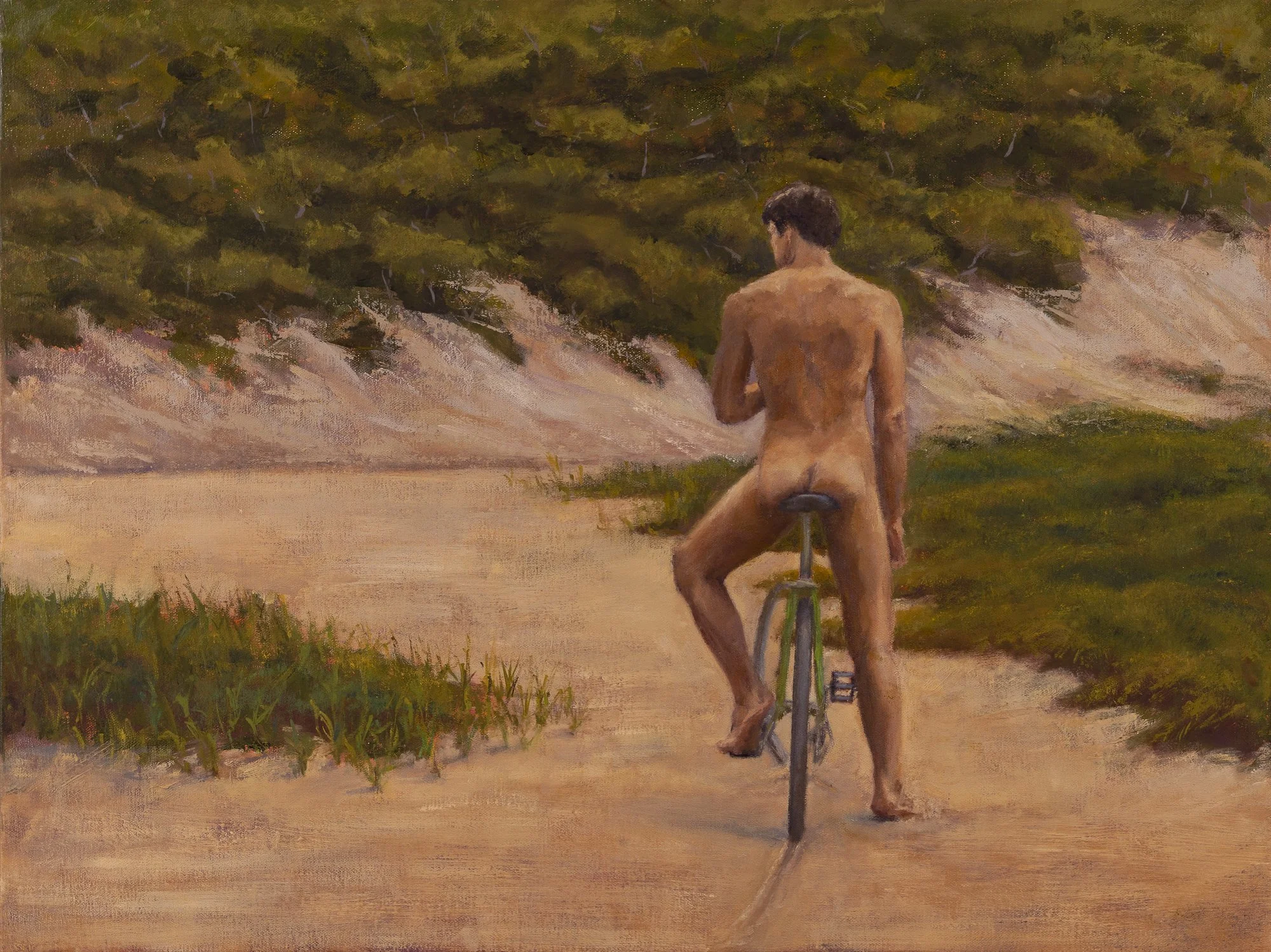
Provincetown has been doing this to artists for more than a century. In 1899, Charles Hawthorne founded the Cape School of Art here, drawn by what he called "the most brilliant light in North America." It is not hard to understand why. This narrow strip of land — sea on nearly every side, sky opening above it, light reflected and refracted by water — changes the way one sees.
That light became part of my own education before I understood it.
I came to painting late, accidentally, and then obsessively. After I left publishing, I signed up for a morning class at the National Academy of Art and Design in New York. I was awful. But something unexpected happened in that mess of color and uncertainty: I loved it. There was freedom in not knowing, in being bad at something, in beginning again without authority. Publishing had required confidence. Painting allowed doubt.
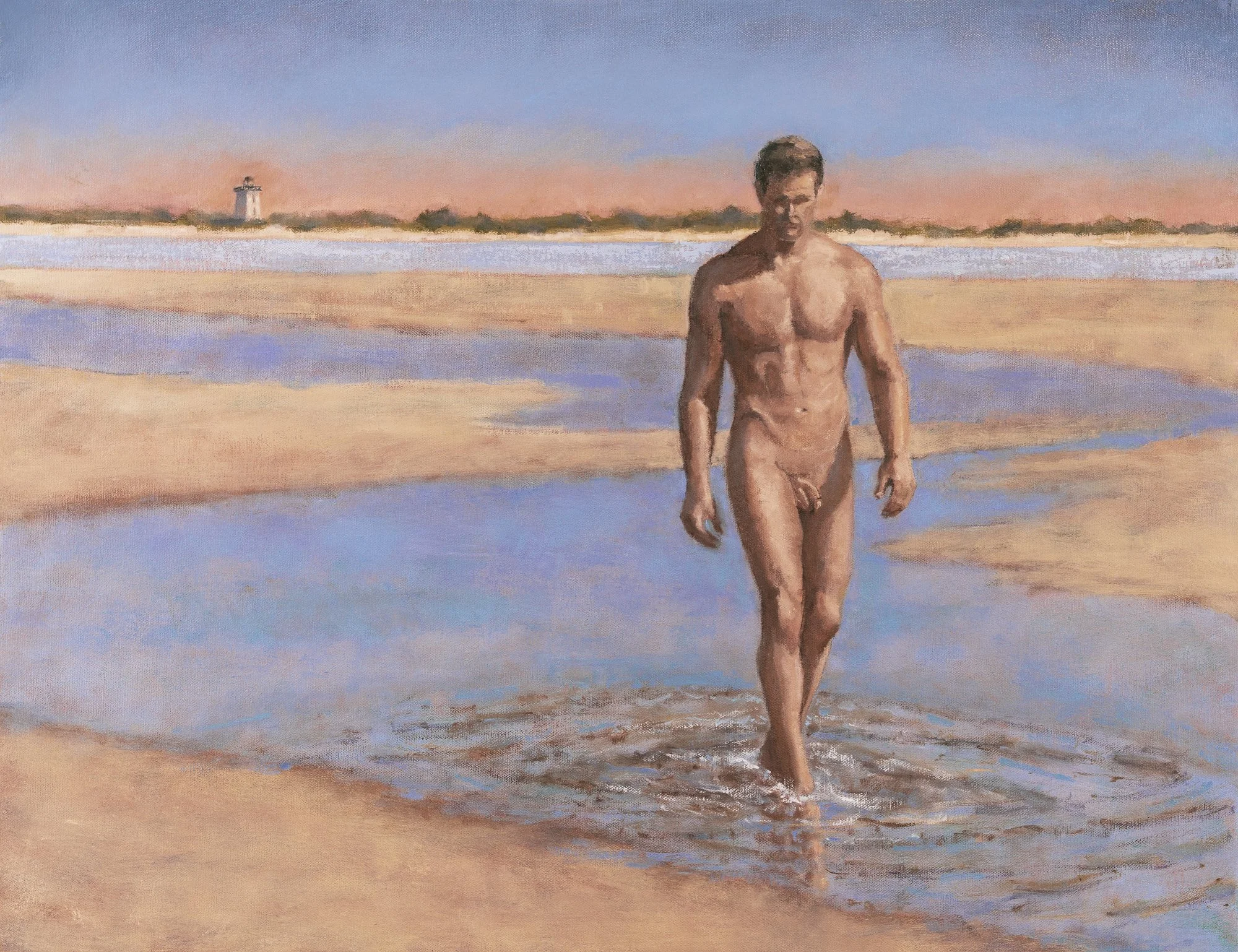
That doubt became a form of attention. I wanted to get better, and that desire eventually consumed everything else. Classes led to workshops. Workshops led to an MFA at the New York Academy of Art. But what I was really learning, slowly, was how to see light — and what I wanted to see turned out to be inseparable from where I had chosen to live.
The painters who matter most to me share one essential quality: they make the figure feel present in a specific kind of light. Thomas Eakins painted male swimmers with an unsentimental physicality. Henry Scott Tuke placed young men against water with a tenderness that still reads, across time, as love. Edwin Dickinson found in the Cape a suspended, uncertain atmosphere that made reality feel unstable and charged.
Those painters gave me permission to look directly — at bodies, at water, at men, at desire, at solitude — without apology.
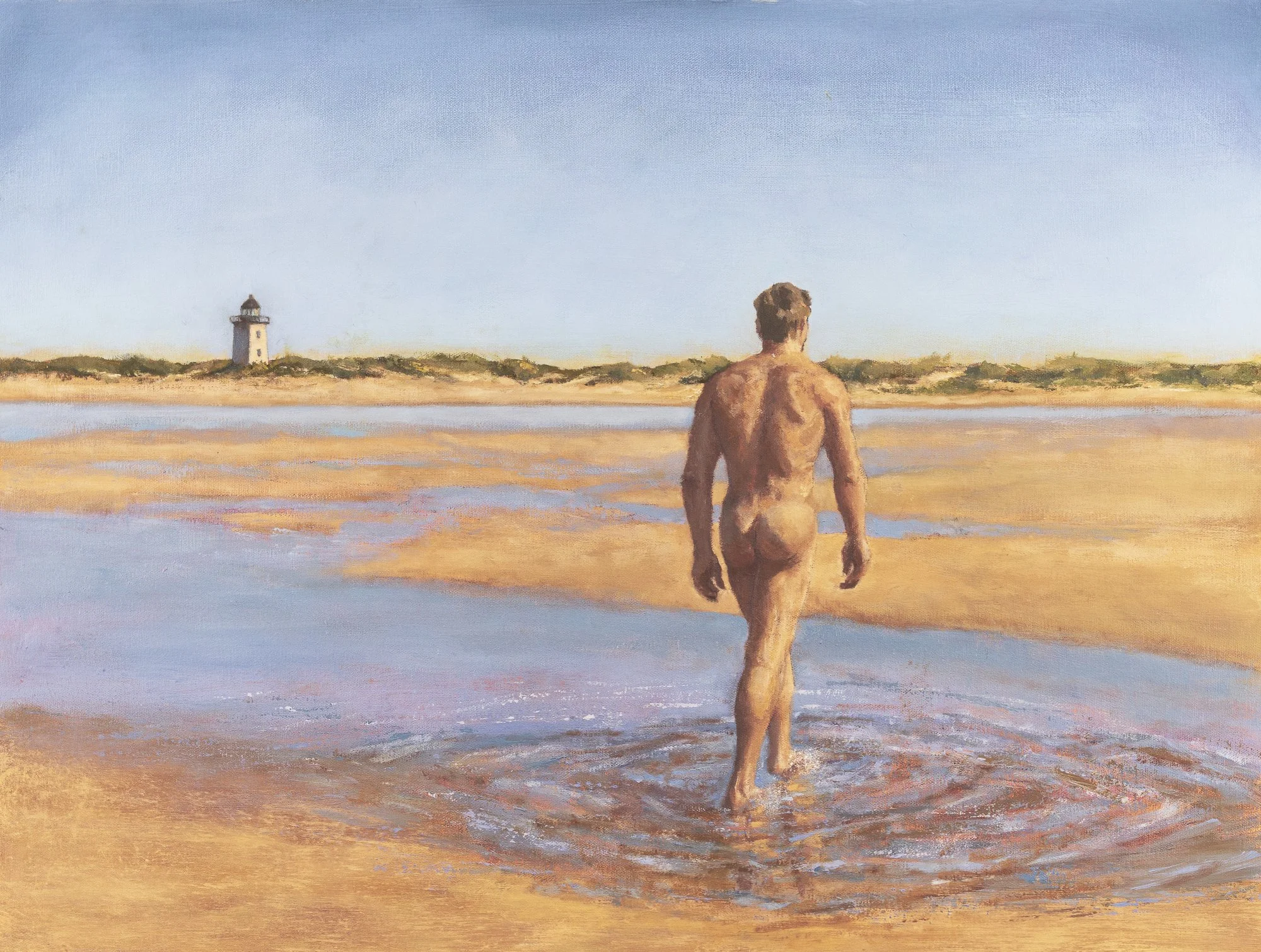
That is what I mean when I say I paint Provincetown through a queer gaze. The phrase can sound theoretical, but for me it is practical. It means I notice tenderness between men. I notice the ease of a body at the edge of water. I notice friendship, desire, intergenerational care, and the charged calm of being alone in a place that still feels communal. I notice how the beach holds memory: generations of people coming here to be seen, to find one another, and to inhabit their bodies more freely.
I am painting Provincetown’s tidal flats, dunes, docks, marsh paths, and open water. But I am also painting what it feels like to belong to a place that made self-recognition possible.
My recent paintings move through the coastal day: bright crossings at midday, figures pausing in shallow water, bodies resting on sand or stone, the rose and violet atmosphere of dusk. Some figures are alone. Some are together. Some are nude, not as provocation, but as a kind of honesty: nothing hidden, nothing to explain.
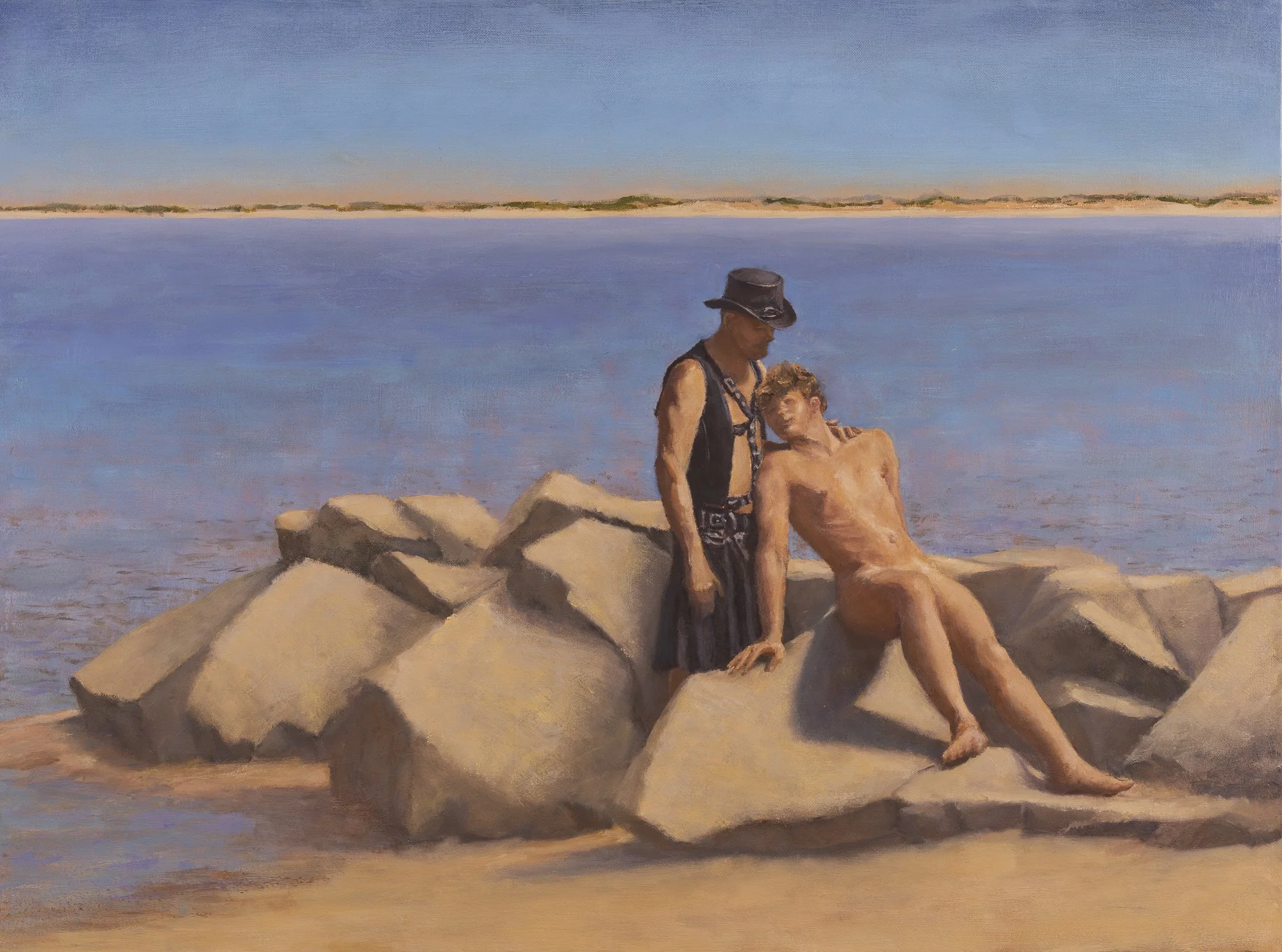
The landscape is never just background. In Provincetown, the line between body and place often dissolves. The tide changes where one can walk. The light changes what one can see. A beach that feels open at noon can feel private by evening. The same path can be ordinary one day and mythic the next.
That is the emotional territory I keep returning to.
Tidal hours are the brief windows when the flats are navigable — when the landscape is neither quite land nor quite sea, when crossing is possible. That is why the phrase stays with me. So much of my life here has taken place in that interval: between solitude and belonging, desire and friendship, uncertainty and recognition.
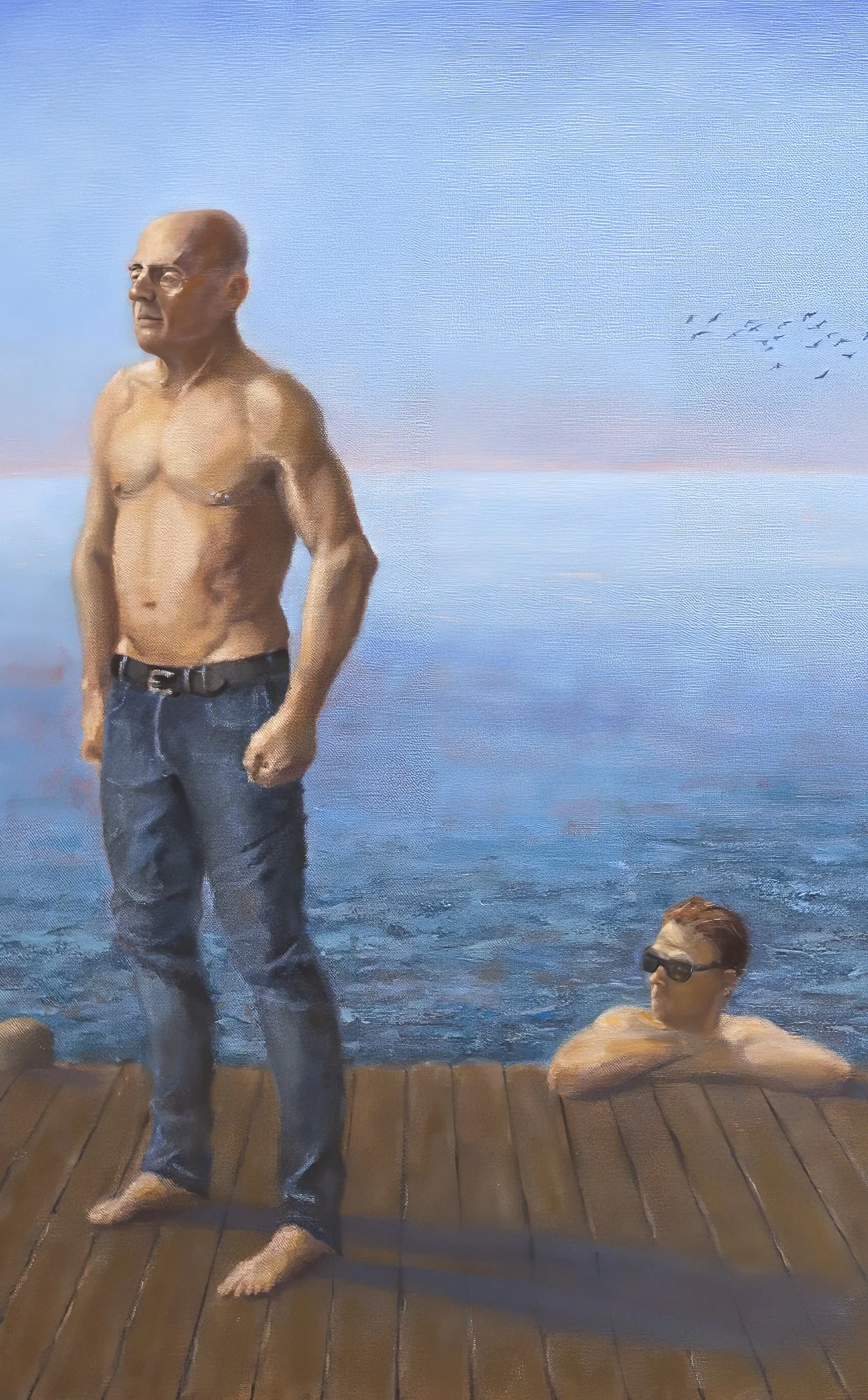
I have been working my way toward these paintings since a morning class where I struggled, since an autumn walk across a salt marsh with a dog, since my father’s offhand remark about the ocean and a six-year-old who already knew where he needed to be.
Provincetown did not make me a painter all at once. It taught me, slowly, what I needed to paint.